Can artificial intelligence be creative? Can an AI-generated image be considered art? And who is actually its author – a human or an algorithm?
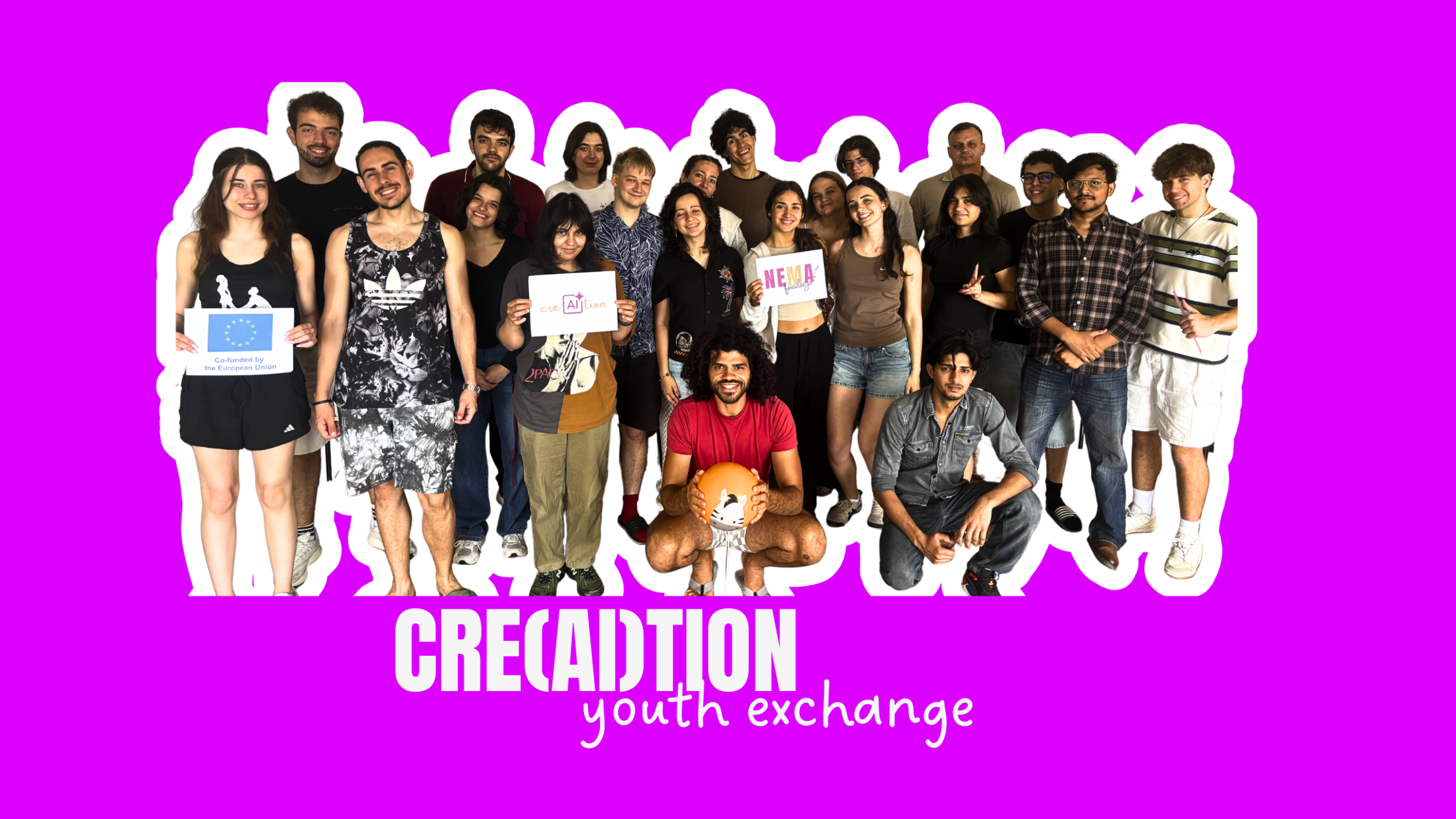
These were exactly the kinds of questions that inspired the Erasmus+ project “creAItion”, which took place from 7 to 16 July 2026.
Over several intensive days, participants explored the space where art, new technologies and human creativity meet. However, the project was not simply about discovering new AI-powered applications. Above all, we wanted to explore how artificial intelligence influences the way we create, communicate and perceive contemporary art.
From Picasso to Artificial Intelligence
We began the programme by looking at art from a more traditional perspective.
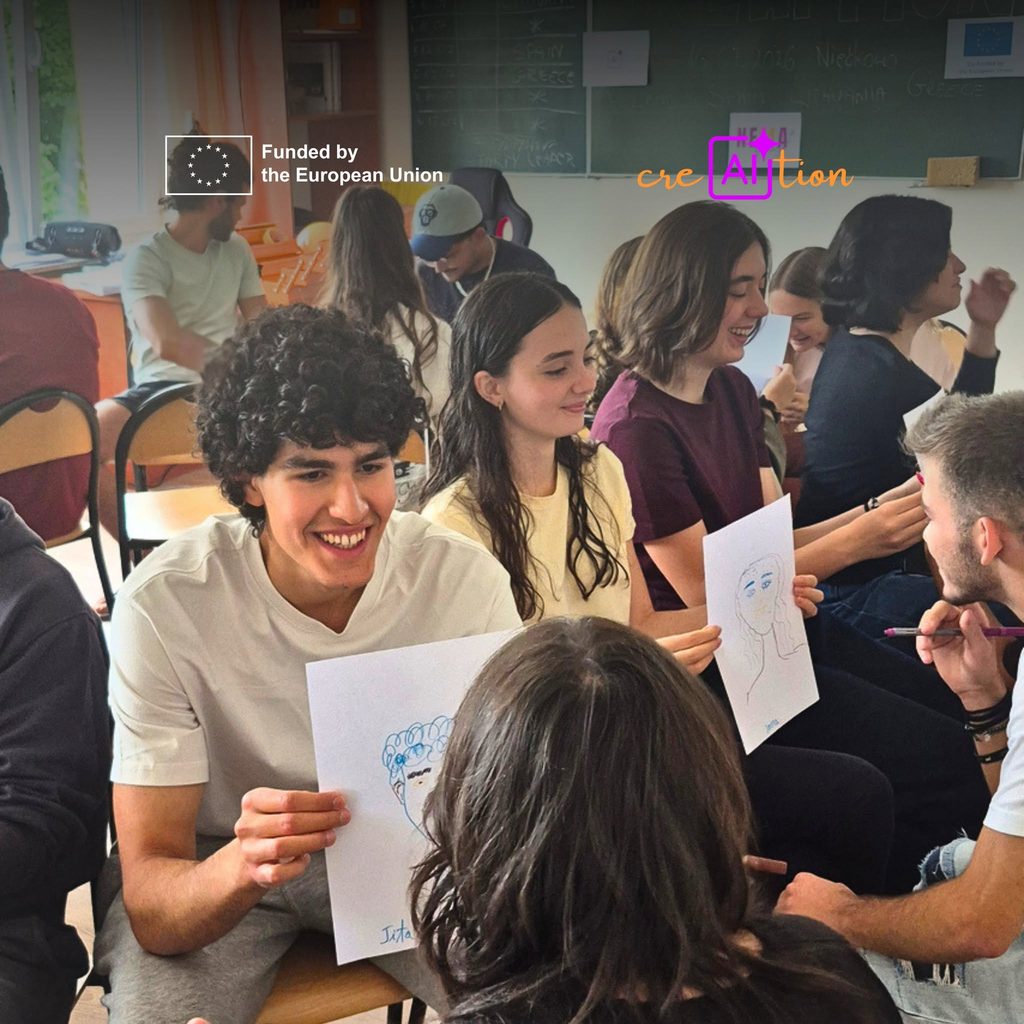
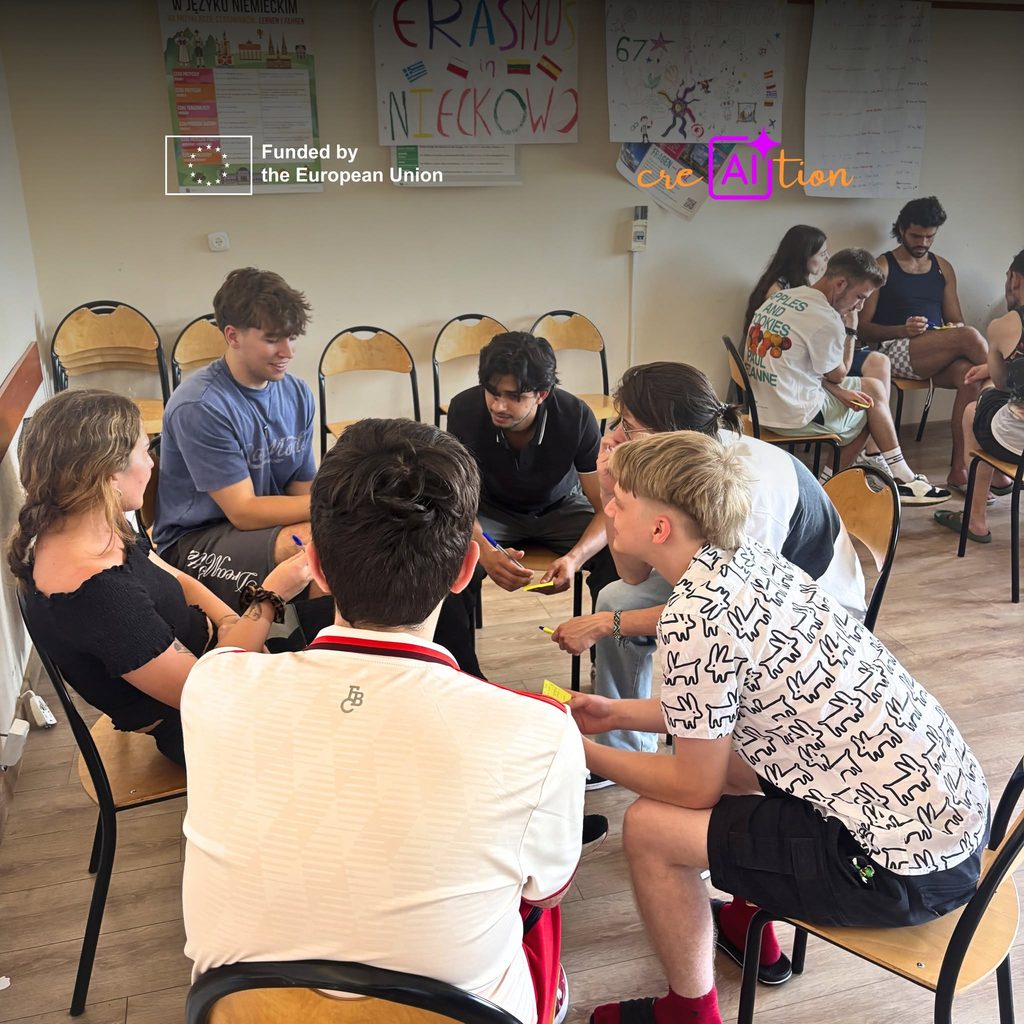
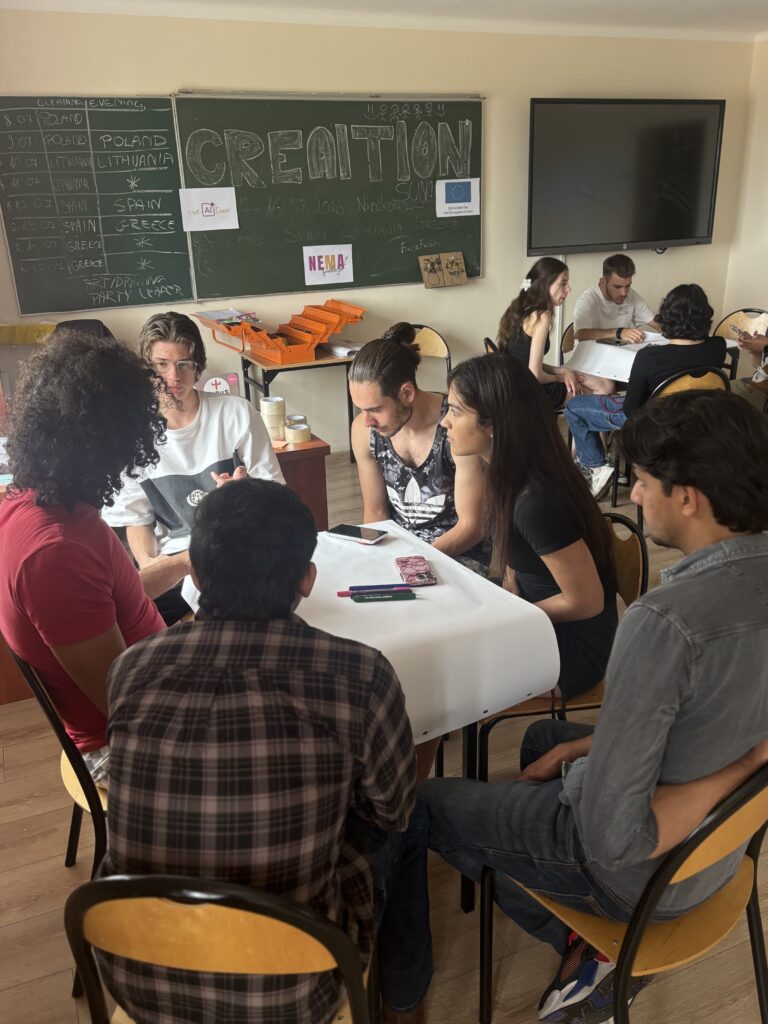
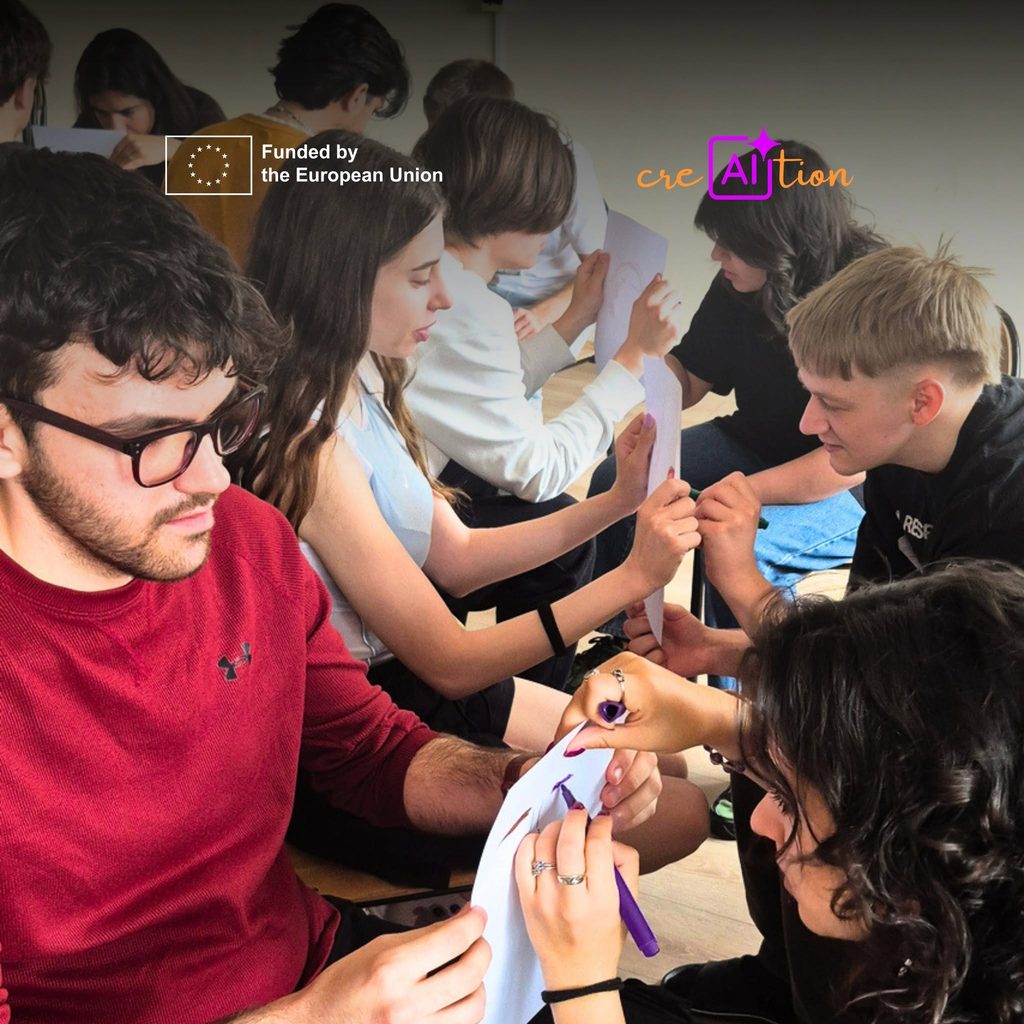
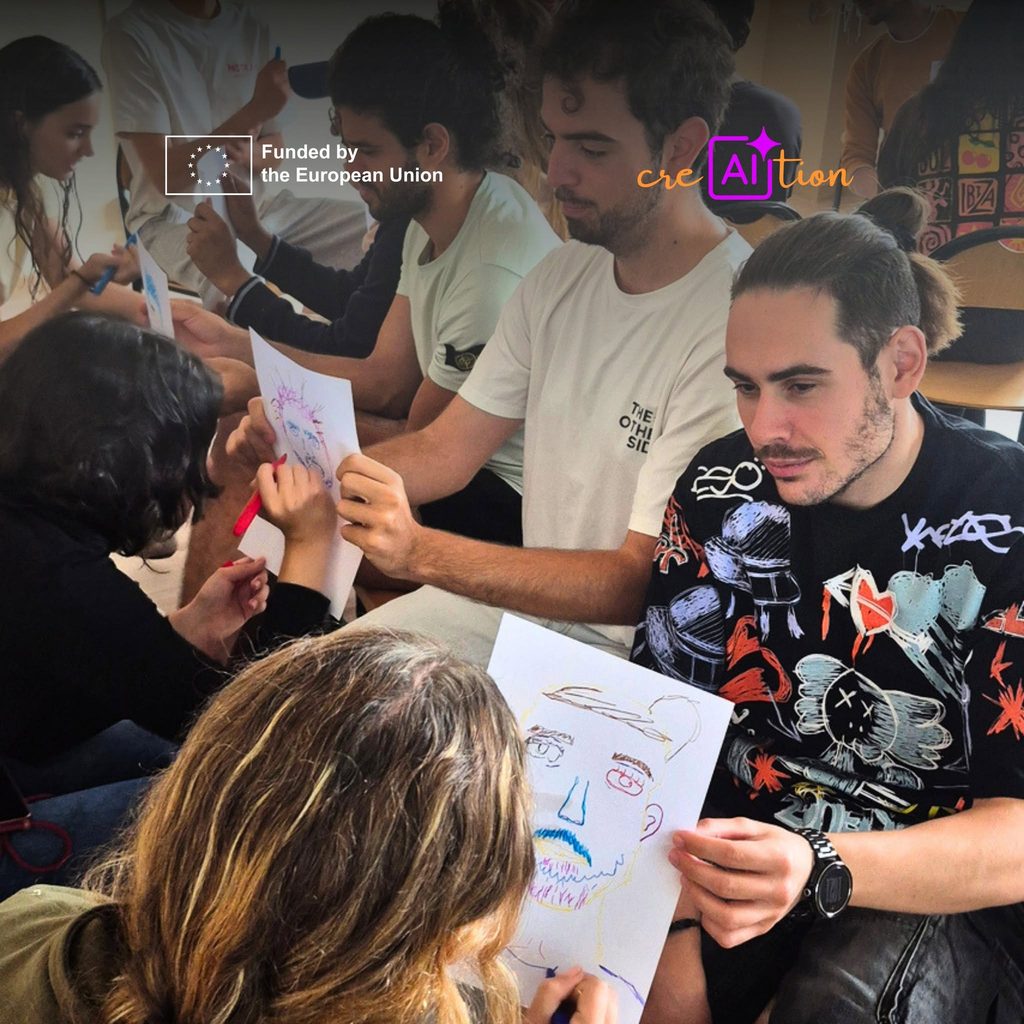
Participants created self-portraits inspired by Pablo Picasso, reflected on what art actually is and discussed who can be called an artist today. Working in national groups, they also presented important artists from their own countries, combining creativity with intercultural learning from the very beginning of the project.
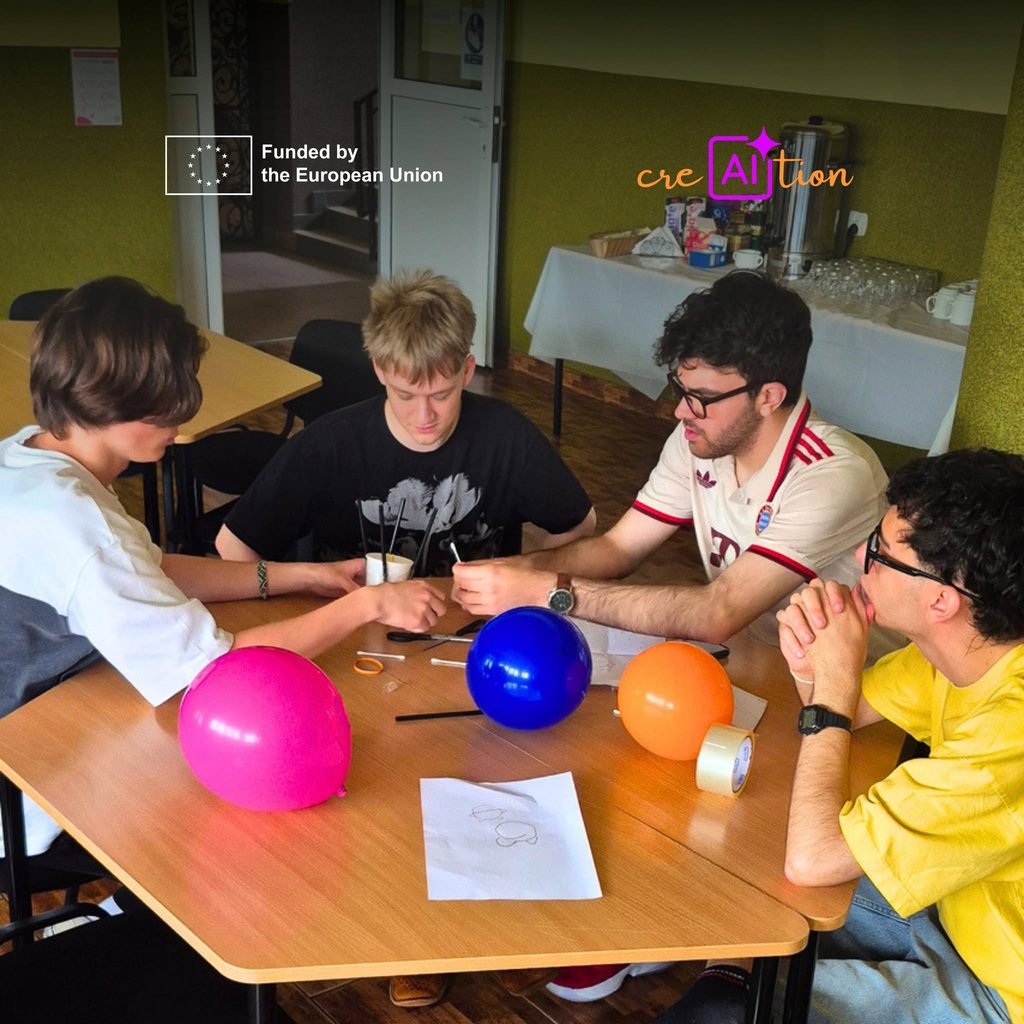
One of the more interesting challenges was to invent entirely new and original artistic movements. Each team had to create its own style, define its principles and present it to the rest of the group.
Only then did artificial intelligence enter the picture…
AI as a New Creative Tool
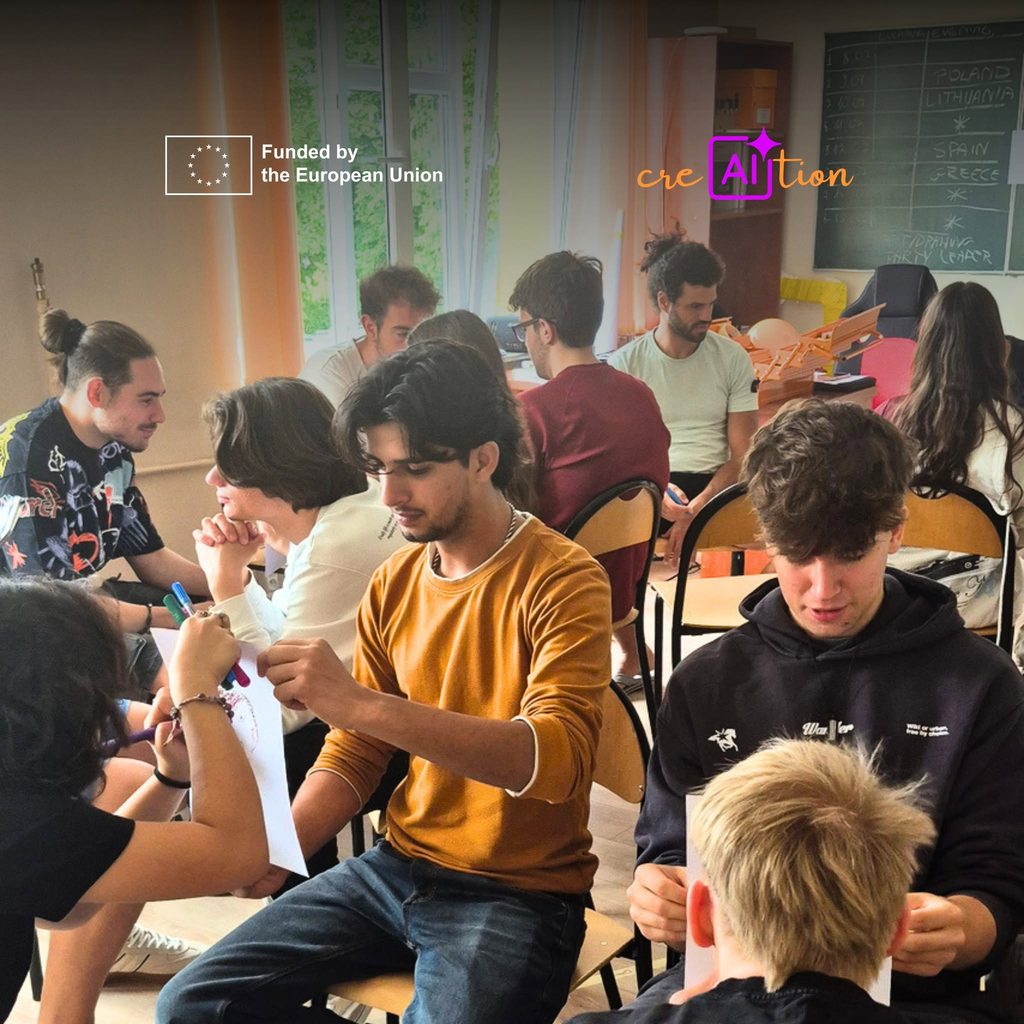
During the following workshops, participants explored tools that make it possible to create with the help of AI, including:
- graphics,
- animations,
- music,
- voice content and multimedia materials.
They experimented with tools such as DALL·E, DeepArt, Runway ML, SUNO and ElevenLabs.
At the same time, they learned how to create effective prompts and discovered how much the way an instruction is formulated can influence the final result.
But creAItion was not an AI tools training course.
The questions that emerged while experimenting with technology were much more important.
Can AI replace an artist?
Is content generated by an algorithm truly original?
Should the audience know that a particular work was created with the use of artificial intelligence?
Technology Also Has Another Side
One of the important topics of the project was deepfake technology and the risks connected with manipulating images and information.
Participants explored real-life examples of how this technology can be used and tested the possibilities of available tools themselves. This helped them see how easily modern technology can blur the line between authentic and artificially generated content.
The topic was further developed during a World Café session, where we discussed:
AI and the Job Market,
AI Ethics,
AI and Misinformation,
What Will Life with AI Look Like in 20 Years?
The discussions showed that artificial intelligence can be fascinating, but at the same time it raises many questions for which there are still no simple answers.
Creativity First
Technology was an important part of creAItion, but it was not the only one.
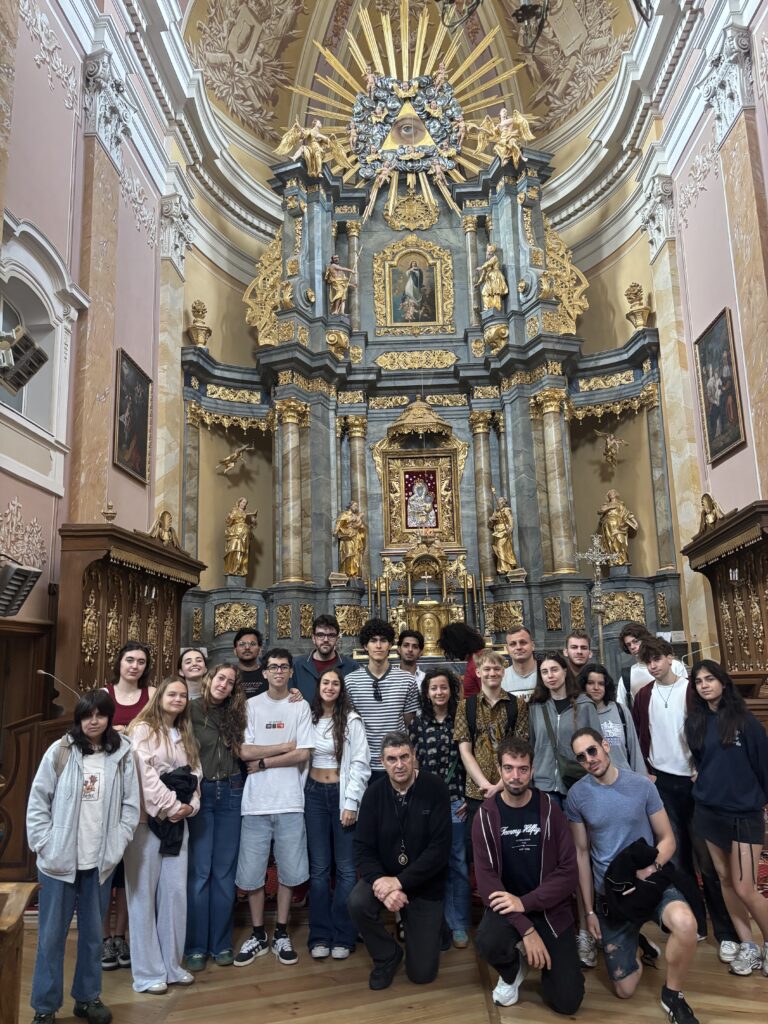
The programme also included workshops on graffiti, origami, perspective and colour, outdoor activities, creative challenges, as well as a visit to Szczuczyn focused on discovering local history and architecture.
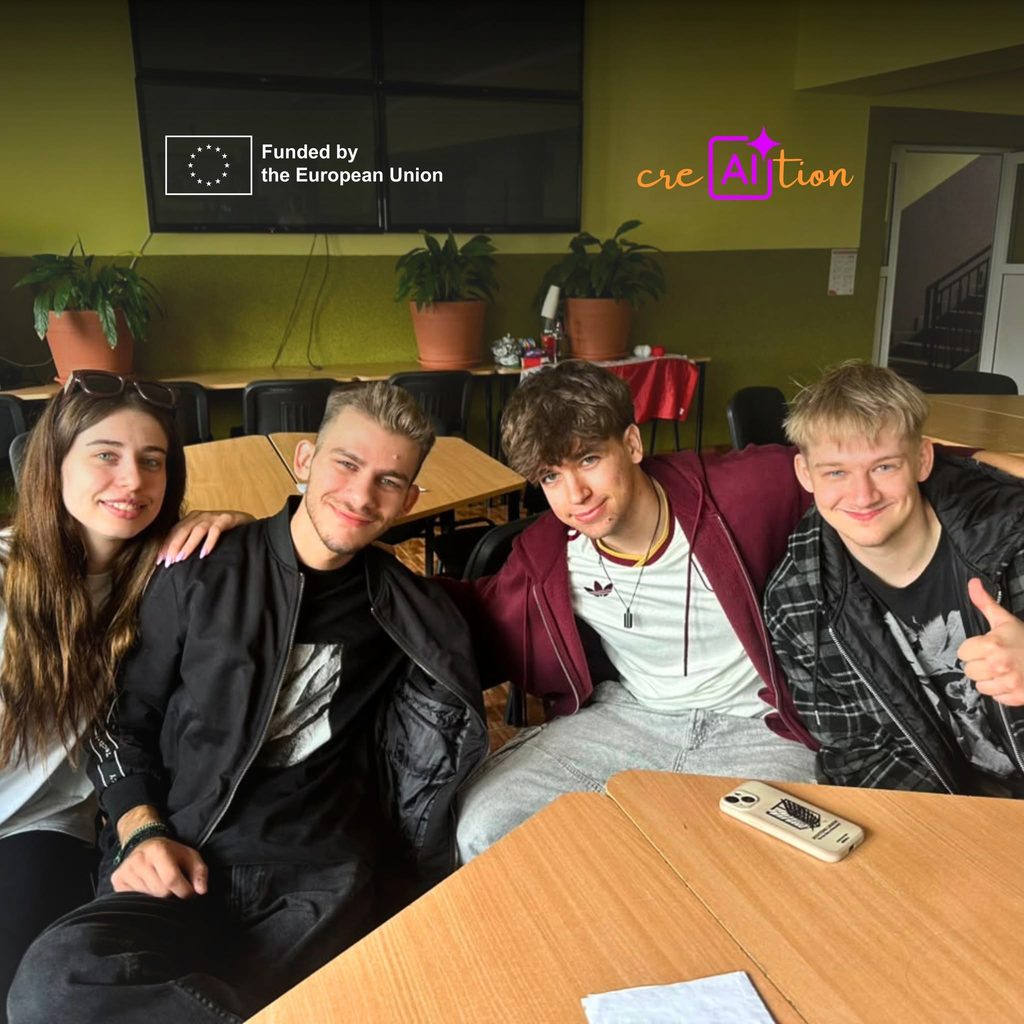
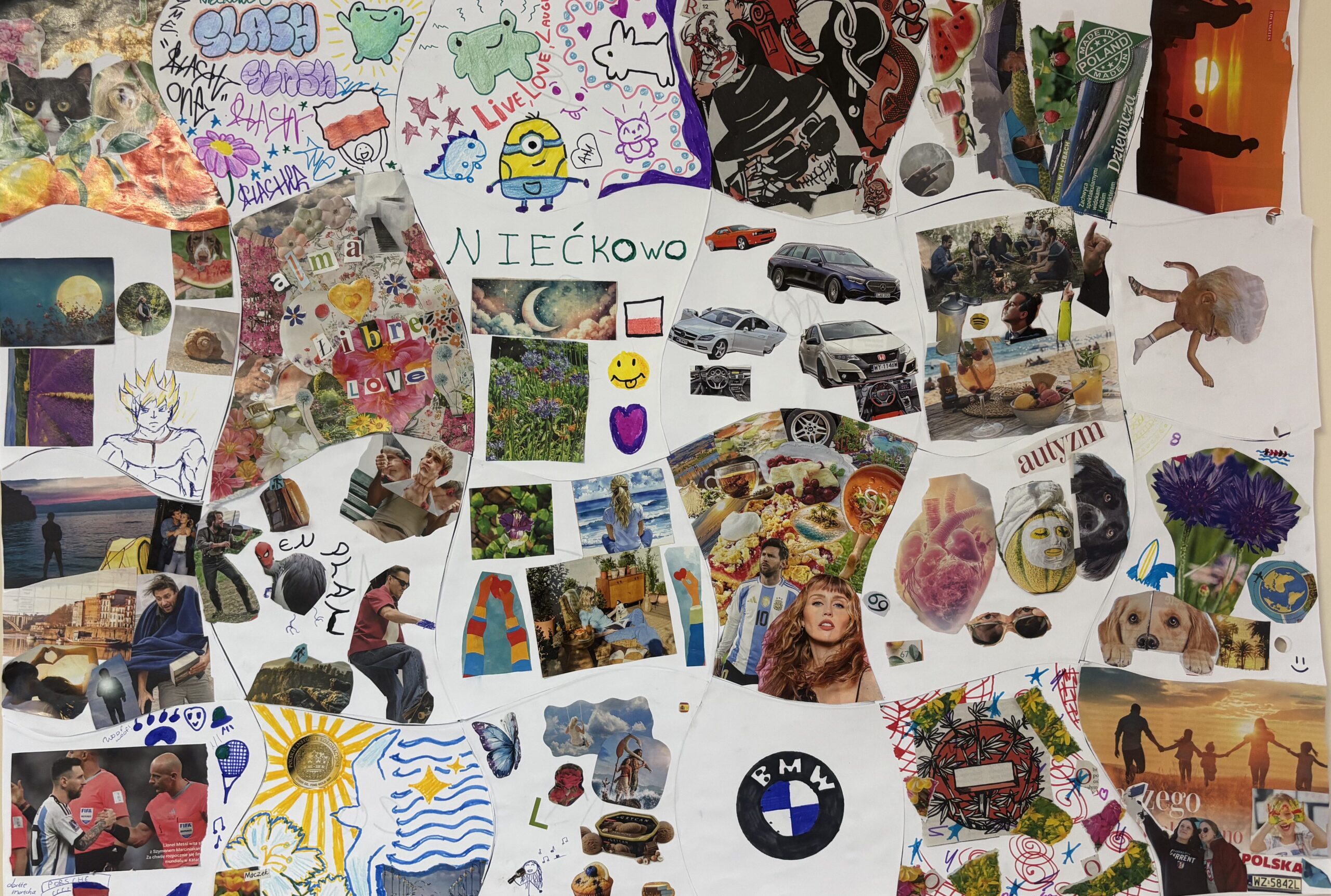
Intercultural evenings were another important part of the project. Participants presented their countries, traditions, food, music and dances.
As a result, creAItion became a project in which technology met art, and art brought together people from different cultures.
And that is exactly how creAItion was created. 🎨🤖
International Cooperation
The project was implemented in cooperation with partner organisations from three countries:
- 🇪🇸 Spain – Asociación EuroMuévete
- 🇱🇹 Lithuania – ASOCIACIJA APKABINK EUROPA
- 🇬🇷 Greece – KOINONIKI SYNETAIRISTIKI EPICHIRISI SYLLOGIKIS KAI KOINONIKIS OFELEIAS EYFORIA
The “creAItion” project was also held under the Honorary Patronage of the Mayor of Szczuczyn, which was an important form of support for us and highlighted the local dimension of our international initiative.
The “creAItion” project was funded by the European Union under the Erasmus+ Programme.