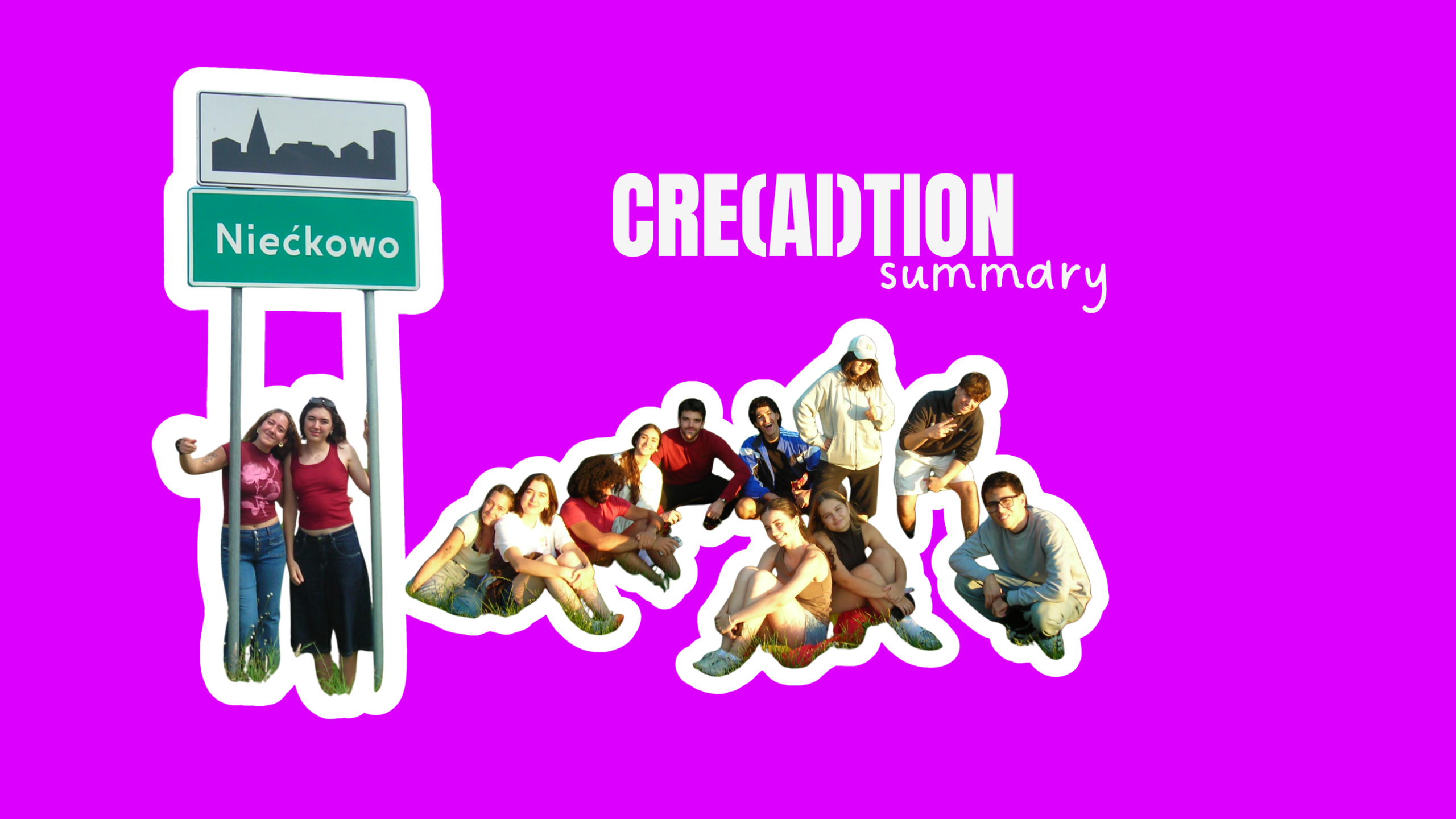
A few intensive days. 28 participants from 4 countries. More than 50 digital works. Dozens of conversations, experiments, workshops and shared ideas. Art created by hand and art created with the support of algorithms. New technologies, new friendships and even more questions about what the future may look like.
This is how we can summarise creAItion – an international Erasmus+ Youth Exchange, which took place from 7 to 16 July 2026.
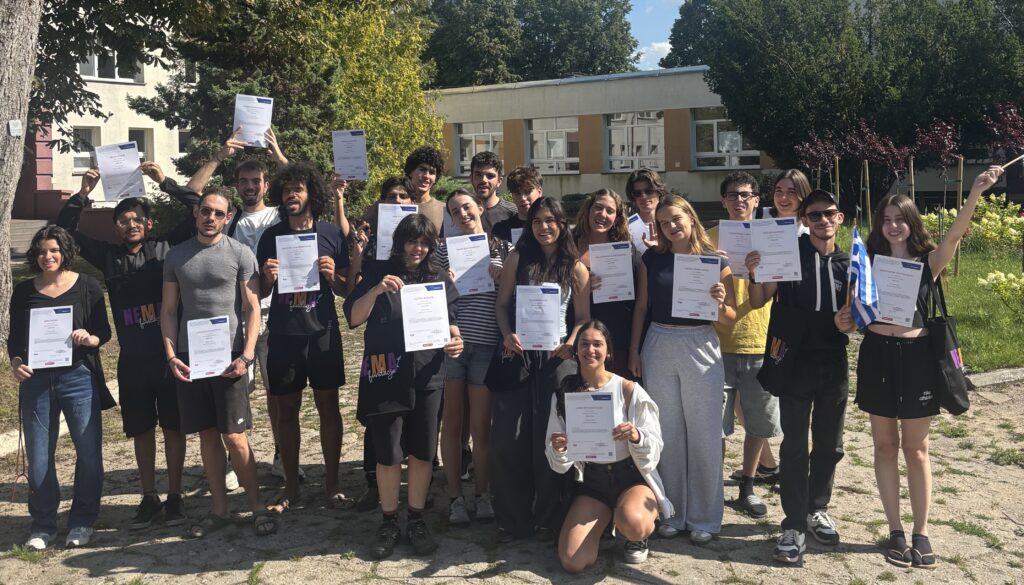
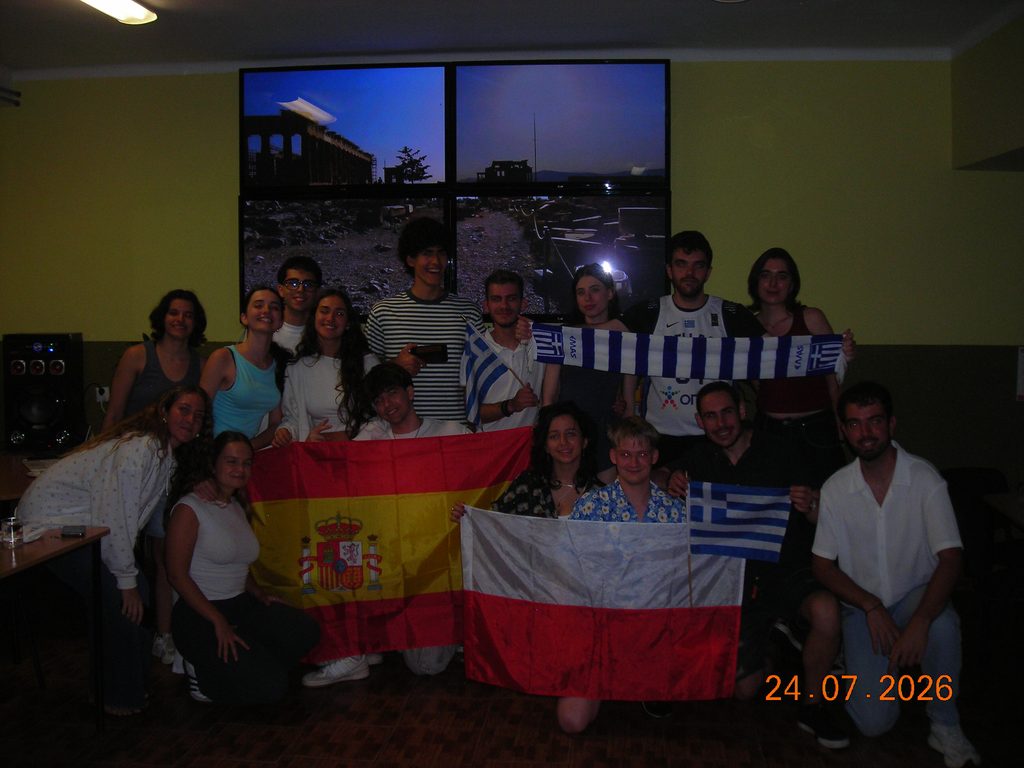
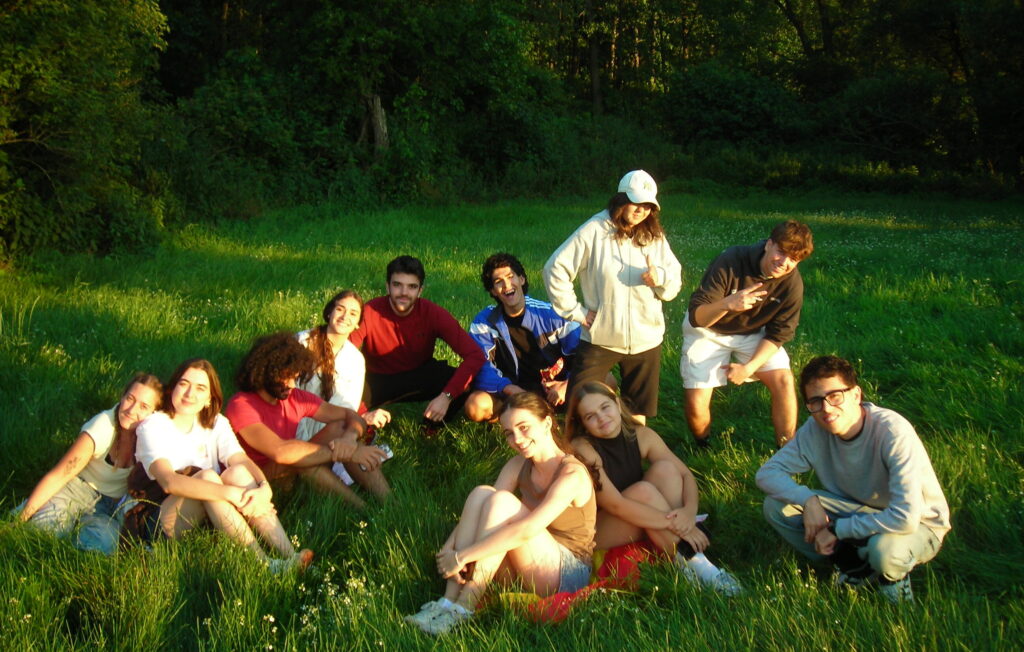
The project brought together 28 young people from Poland, Spain, Lithuania and Greece, who spent the following days exploring the possibilities of artificial intelligence, developing their creativity and reflecting on the responsible use of new technologies.
What is particularly important is that for many of them this was a completely new experience – during the initial evaluation, as many as 90.9% of participants stated that they had never previously taken part in a similar Erasmus+ project or international youth exchange.
From Integration to Creating Together
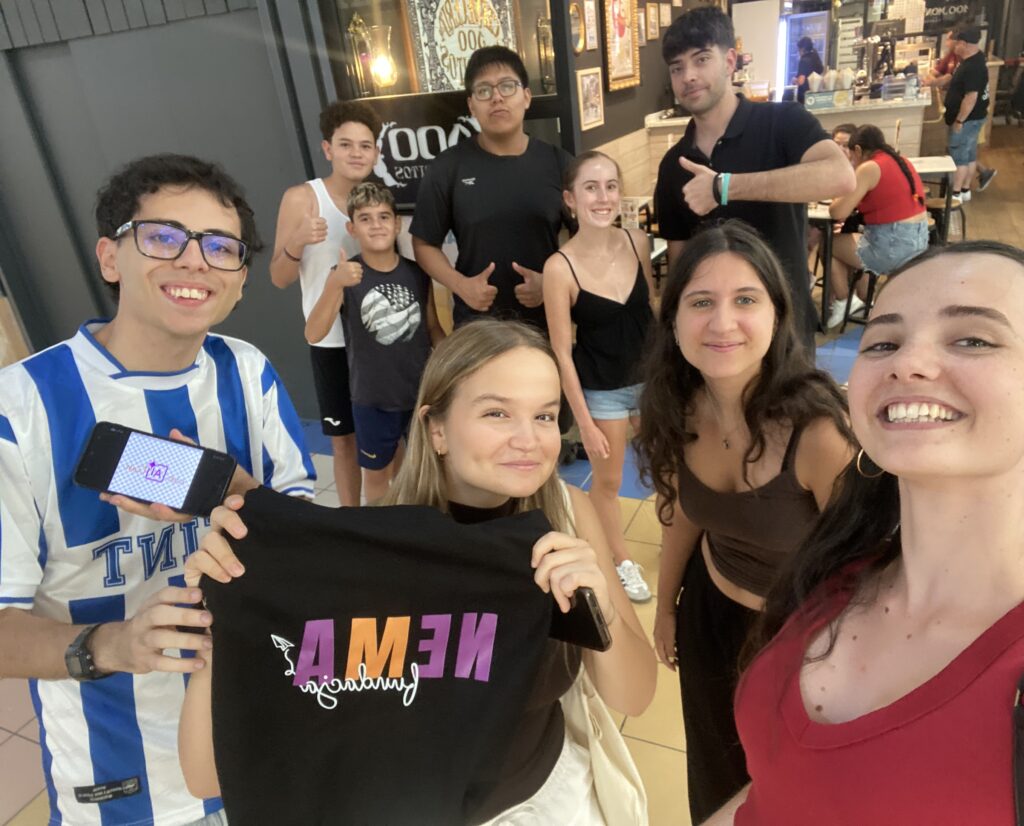
We began the project by building an international group. Integration games, creative challenges and teamwork activities helped participants get to know one another better and create an environment that encouraged cooperation.
Already during the initial evaluation, participants indicated that they primarily wanted to learn about practical applications of AI in art, improve their English language skills, learn how to work in an international environment, discover other cultures and develop their own creativity.
With each passing day, there were fewer separate “national groups” and more of one shared creAItion group.
Art became the starting point for further activities. Participants created self-portraits inspired by Picasso, discovered artists from the partner countries, invented their own artistic movements and experimented with graffiti, perspective, colour and other traditional forms of artistic expression.
Then artificial intelligence entered this world.
AI – Not Only in Theory
One of the main objectives of the project was to show participants that artificial intelligence can be a tool supporting creativity – but using it also requires knowledge, critical thinking and responsibility.
Participants worked with various AI tools, including DALL·E, Runway ML, DeepArt and SUNO, creating graphics, animations, music and other multimedia materials.
They also learned how to create effective prompts and explored how the way an instruction is formulated can influence the final result.
And here, the results turned out to be even better than we had originally expected.
100% of participants stated that, thanks to taking part in the project, they increased their knowledge of the conscious and responsible use of artificial intelligence, including its application in artistic projects.
In the open-ended responses, participants particularly often mentioned that they had learned how to create effective prompts, discovered new tools for generating images, videos and other digital content, and gained practical skills in using them.
We Did Not Avoid Difficult Questions
creAItion was not simply a project about testing new applications.
We also discussed AI ethics, deepfakes, misinformation, the future of the labour market and the impact of artificial intelligence on society.
During the World Café session, participants discussed four topics:
- AI and the Job Market
- AI Ethics
- AI and Misinformation
- Life with AI in 20 Years
Our aim was not to find one correct answer to the question of whether artificial intelligence is good or bad. What mattered more was learning how to analyse information, recognise both opportunities and risks, and make more informed decisions about the use of new technologies.
The final evaluation confirmed the effectiveness of these activities – 100% of respondents stated that during the project they developed their critical thinking skills and their ability to reflect on the role of artificial intelligence in art.
More Than 50 Works and a Shared VR Gallery
The most visible result of creAItion was the interactive VR gallery created in MetaSteps.
👉 Visit the creAItion VR Gallery: https://bit.ly/4x53zZb
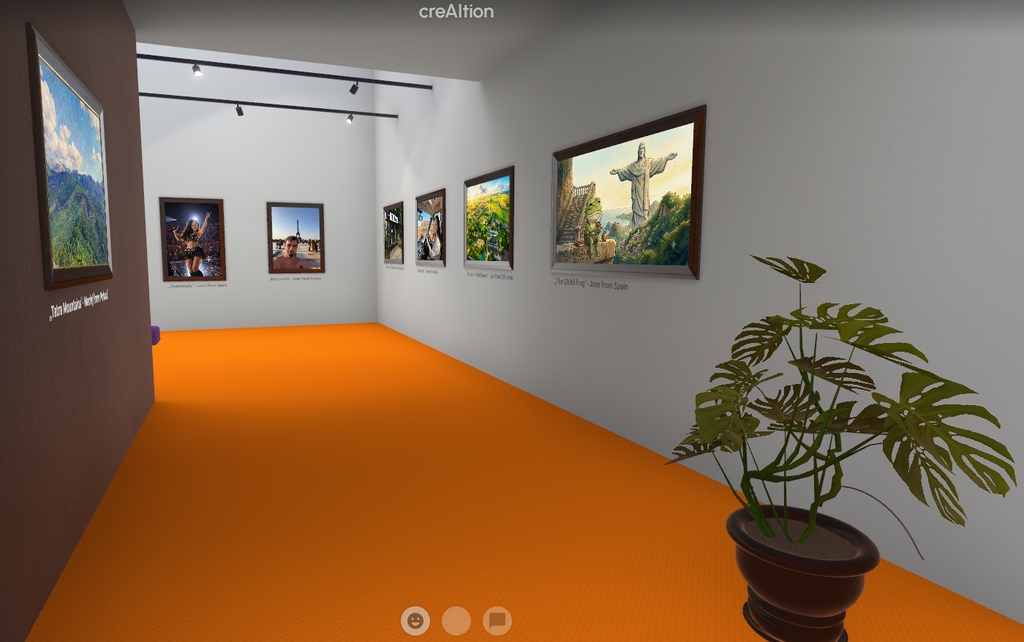
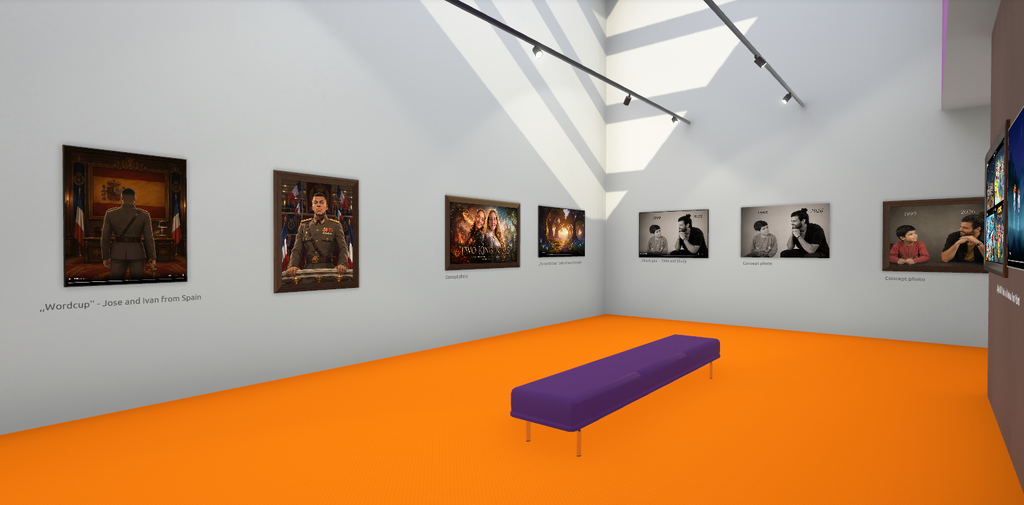
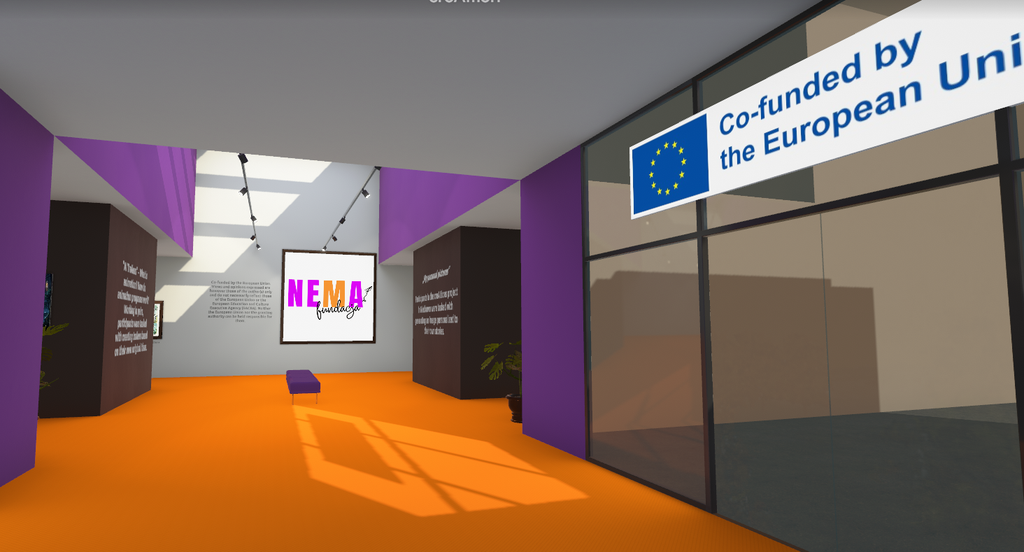
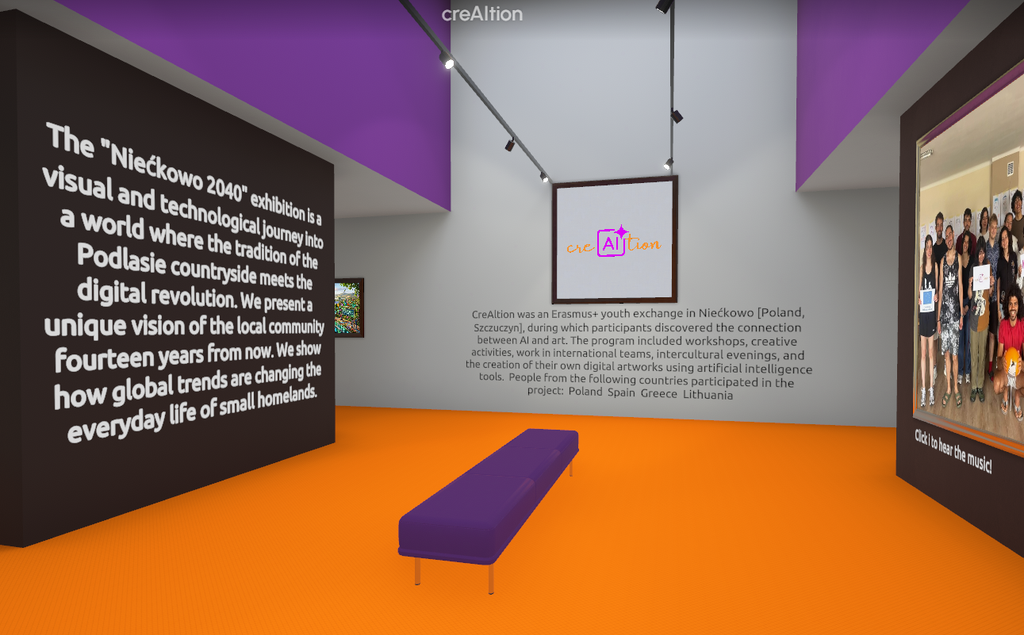
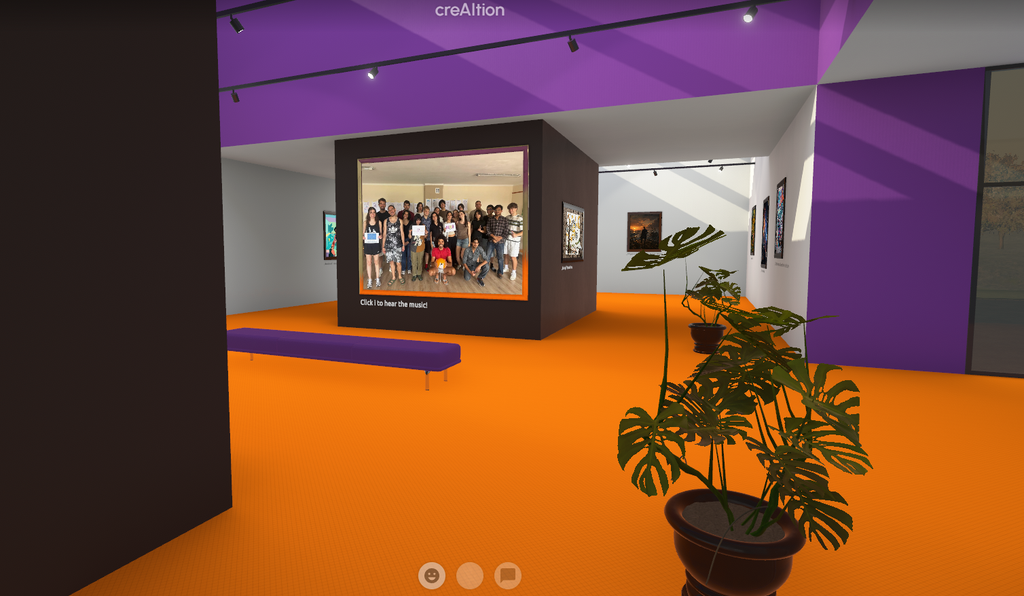
During the project, participants created more than 50 digital works, including graphics, animations and audio materials. They then worked together to select the materials, design how they would be presented and create the virtual exhibition space.
The gallery was therefore not a product prepared for the participants – it was created together with them and by them.
In addition to the gallery, the project also resulted in:
- “Artists from My Country” presentations prepared by all national groups,
- dozens of AI-generated music tracks and short animations,
- a shared “Identity Mosaic”, made up of individual elements representing the interests, values and personalities of the participants,
- photographic and video documentation of the project,
- materials documenting the results of the World Café discussions,
- promotional and educational content published on social media.
Competence Development That Can Be Measured
However, digital works were not the only result of the project.
The most important outcome was the development of the participants themselves – and the results of the final evaluation clearly demonstrate the scale of this impact.
As many as 95.8% of participants stated that they had developed their creative thinking and problem-solving skills. A further 87.5% reported improvement in time management and decision-making skills while working in teams.
Participants also reported development in:
teamwork skills, communication in English, creative and critical thinking, public speaking, time management and leadership skills.
We are particularly pleased that as many as 91.7% of participants stated that they wanted to continue creating digital content and engaging in international cooperation after the project ended.
This is significantly higher than the 40% target set during the planning stage.
A Project That Met Participants’ Expectations
The evaluation results also show that participants rated the overall experience very highly.
100% of respondents confirmed that the project met their expectations.
At the same time, 66.7% of participants rated the entire project 5/5, while a further 29.2% rated it 4/5, meaning that a total of 95.9% of participants gave creAItion one of the two highest possible ratings.
The group itself and the cooperation between participants were also rated very highly. As many as 70.8% of respondents rated the participant group 5/5, while a further 20.8% rated it 4/5. The average self-assessment of participants’ own engagement in project activities was 4.42/5.
In the open-ended responses, participants frequently highlighted mutual support, openness, a positive atmosphere, sharing knowledge and active involvement in completing shared tasks.
We Learned From One Another
A very important element of creAItion was peer-to-peer learning.
Representatives of the partner groups prepared and facilitated their own workshops, sharing knowledge, working methods and experience.
As a result, participants were not only recipients of the programme – they became its co-creators.
The partner organisations benefited as well. Together, we developed a set of tested methods and workshop scenarios that can be used in future Erasmus+ projects and local educational activities.
The project also gave us practical experience in using AI tools and virtual galleries as outcomes of non-formal education projects.
creAItion Beyond the Project
We wanted the project results to continue beyond the final day of the exchange.
That is why dissemination was such an important part of the project.
Information, photos, materials and the results of participants’ work were published by Fundacja NEMA and the partner organisations. In total, more than 20 posts were published on Instagram and Facebook, as well as 4 articles on the Fundacja NEMA website.
Online dissemination activities allowed information about the project to reach at least 3,000 people, including young people, NGOs, schools and educational institutions.
After returning to their home countries, participants also organised 4 local dissemination activities, during which they shared the project results with their communities and other young people interested in artificial intelligence and art.
We are also particularly pleased that 91.7% of participants stated that they would like to take part in a similar project organised in Poland in the future.
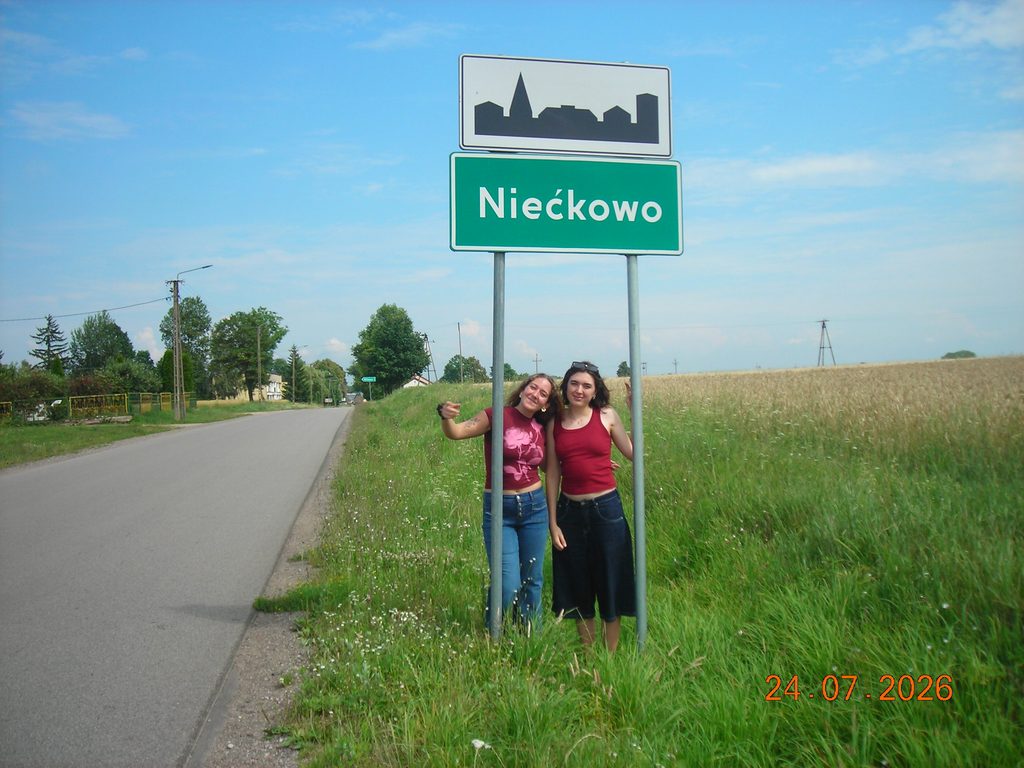
Szczuczyn Also Became Part of the Project
We wanted to connect the international character of creAItion with its local surroundings.
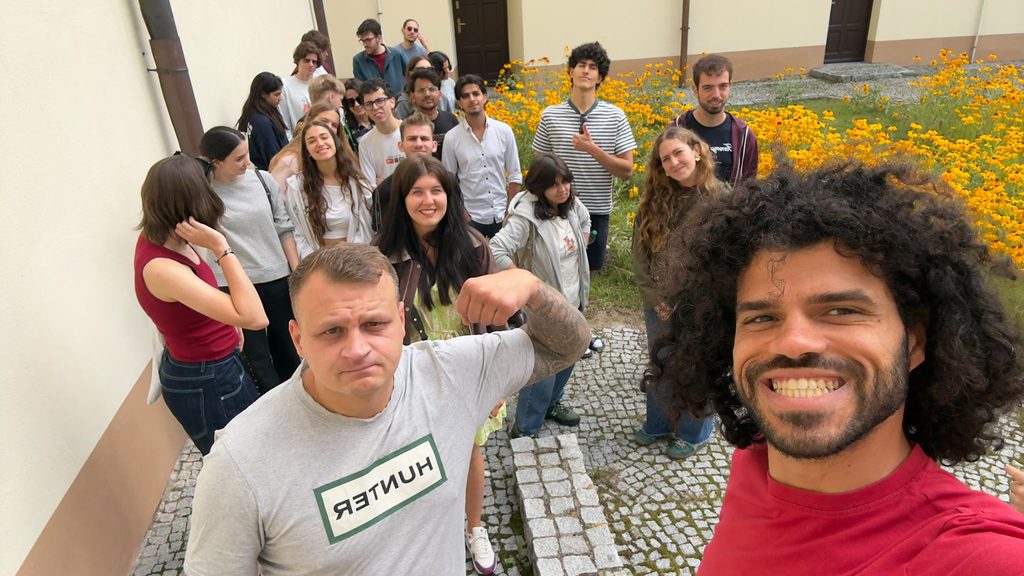
That is why one of the programme activities was a visit to Szczuczyn, where participants had the opportunity to discover local history, architecture and cultural heritage.
The project was also held under the Honorary Patronage of the Mayor of Szczuczyn, which was an important form of support for us and highlighted the local dimension of this international initiative.
What Remains After creAItion?
The VR gallery with more than 50 works remains.
The photos, videos, animations, music, presentations and educational materials remain.
The methods and workshop scenarios that the partner organisations can use in future activities remain.
But most importantly, what remains is knowledge, new competences, international friendships and greater awareness of how to use artificial intelligence responsibly.
The final evaluation clearly showed that participants not only gained new digital competences but also developed their creativity, critical thinking, social skills and language abilities. The project also left them strongly motivated to continue their development – both in the world of new technologies and through future international initiatives.
creAItion showed us that AI does not have to compete with human creativity. It can become another tool that helps us experiment, create and look at art from a completely new perspective.
At the same time, technology did not replace what mattered most in the project – people, the exchange of experiences, cooperation and the opportunity to create something together.
creAItion in Numbers
28 participants • 4 countries • more than 50 digital works • 100% of participants increased their knowledge of the conscious and responsible use of AI • 100% developed critical thinking and reflection on AI • 95.8% developed creative thinking and problem-solving skills • 87.5% improved their time management and decision-making skills • 91.7% want to continue creating digital content and engaging in international cooperation • 100% confirmed that the project met their expectations • 95.9% rated the project 4/5 or 5/5 • 91.7% would like to participate in a similar project in Poland • at least 3,000 people reached through dissemination activities • 4 local events • more than 20 social media posts + 4 website articles.
👉 Visit the creAItion VR Gallery: https://bit.ly/4x53zZb
International Cooperation
The project was implemented by Fundacja NEMA together with partner organisations:
- 🇪🇸 Spain – Asociación EuroMuévete
- 🇱🇹 Lithuania – ASOCIACIJA APKABINK EUROPA
- 🇬🇷 Greece – KOINONIKI SYNETAIRISTIKI EPICHIRISI SYLLOGIKIS KAI KOINONIKIS OFELEIAS EYFORIA
The “creAItion” project was held under the Honorary Patronage of the Mayor of Szczuczyn.
The “creAItion” project was funded by the European Union under the Erasmus+ Programme.